Gen Z graduates are blaming AI for their unemployment woes when they should be looking somewhere else
Fortune – Tech
fortune.com
Summary
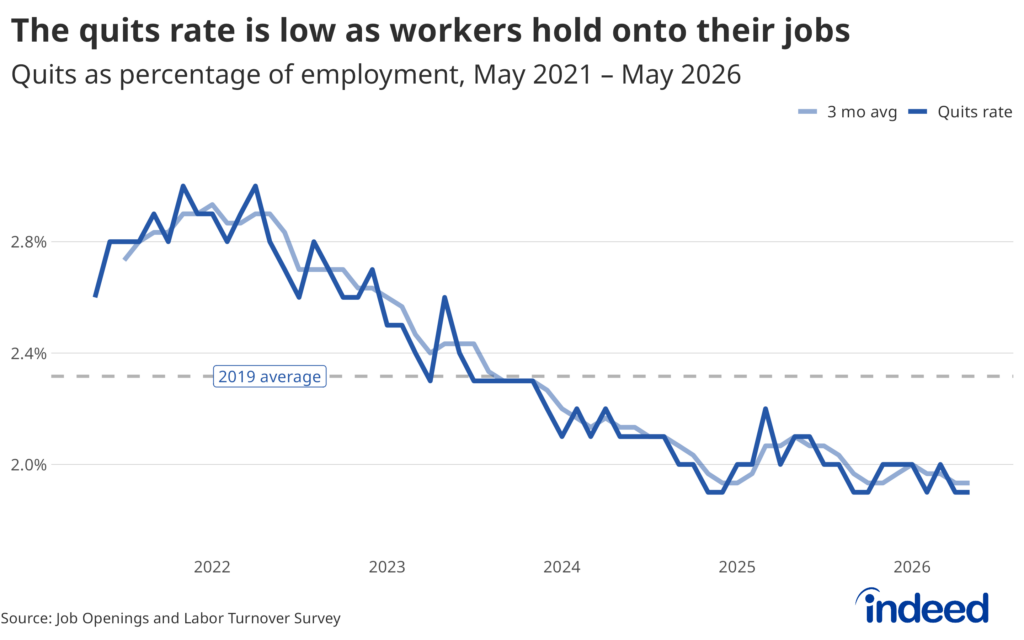
While recent graduates kicked off their summer of potential unemployment by booing commencement speakers extolling the benefits of AI, they may have to look elsewhere to blame for those low hire rates. Gen Z has made their attitude toward AI clear: According to an iCIMS Workforce Report from January, more than half (51%) of Gen Z feel AI poses the greatest threat to their job security. But as anxiety mounts, data on the true impact of AI on the workforce remains muddied: A first-of-its-kind Stanford study published last year reified this fear, finding AI had a “significant and disproportionate impact on entry-level workers in the U.S. labor market,” including a 13% relative decline in early-career worker employment. He cited a February analysis he conducted looking at AI-sensitive jobs and found that since late 2022, those same high-exposure industries—such as warehousing and storage, payroll services, and transportation support roles—were also impacted by trade uncertainty, a slowdown in immigration-driven labor supply, and a contractionary monetary policy. Economists have indeed warned of the trade and immigration policies’ impact on hiring. While 2026 jobs numbers have been stronger than the year before, weak hiring rates have been a throughline, and this mentality among companies to preserve margins may extend to hiring. “Oftentimes when there is heightened uncertainty, it’s just difficult for businesses and people to make decisions in real time,” Laura Ullrich, director of economic research at the Indeed Hiring Lab, told Fortune last year. “And so that slows down employment. It slows down all those processes.” President Donald Trump’s immigration crackdown has had a similar impact on U.S. employment . A National Foundation for American Policy (NFAP) policy brief published earlier this year found falling labor force participation among U.S.-born workers age 16 and older, leading economists to conclude that not only is the immigrant workforce shrinking, but the absence of immigrant workers is also leaving U.S. companies with fewer resources to grow business and increase hiring on domestic-born workers. “Most economic research shows that immigration increases employment opportunities for the U.S.-born, so it would not be surprising if reducing immigration harms American workers,” labor economist and NFAP senior fellow Mark Regets said in the report. Altogether, these factors create a low-hire, low-fire job market, which disproportionately impacts Gen Z. Louis report published this week found that the employment-to-population ratio between 16-to-24-year-olds and -25-to-64-year olds has grown since 2023, suggesting when hiring slows, young people who rely on new job openings are the most impacted. “At times during the business cycle, the labor market can appear strong on the surface while becoming much less hospitable to new entrants, who are often young workers,” Fed researchers wrote.
From the source
While recent graduates kicked off their summer of potential unemployment by booing commencement speakers extolling the benefits of AI, they may have to look elsewhere to blame for those low hire rates. One top economist argued the generation has reasons beyond just the technology to blame for the weak job market they are inheriting, and the proof is simply because today’s unemployment data changed little after the introduction of today’s popular AI tools. “Many have been quick to blame the gap on ChatGPT’s November 2022 release and the broader rise of AI,” Apollo chief economist Torsten Slok said in a recent blog post . “But the AI-exposed sectors where these graduates cluster are also the most sensitive to Fed tightening, trade-war uncertainty and slowing immigration, so the entry-level squeeze is far more likely a product of the general low-hire, low-fire labor market than of a technology that companies had barely begun to deploy when the gap emerged.” The unemployment rate for recen
Read the full article
Published by Fortune – Tech on fortune.com