ℹ️ Informational only. This site aggregates public news and does not provide legal or immigration advice. Always verify with USCIS.gov or travel.state.gov. Full disclaimer →
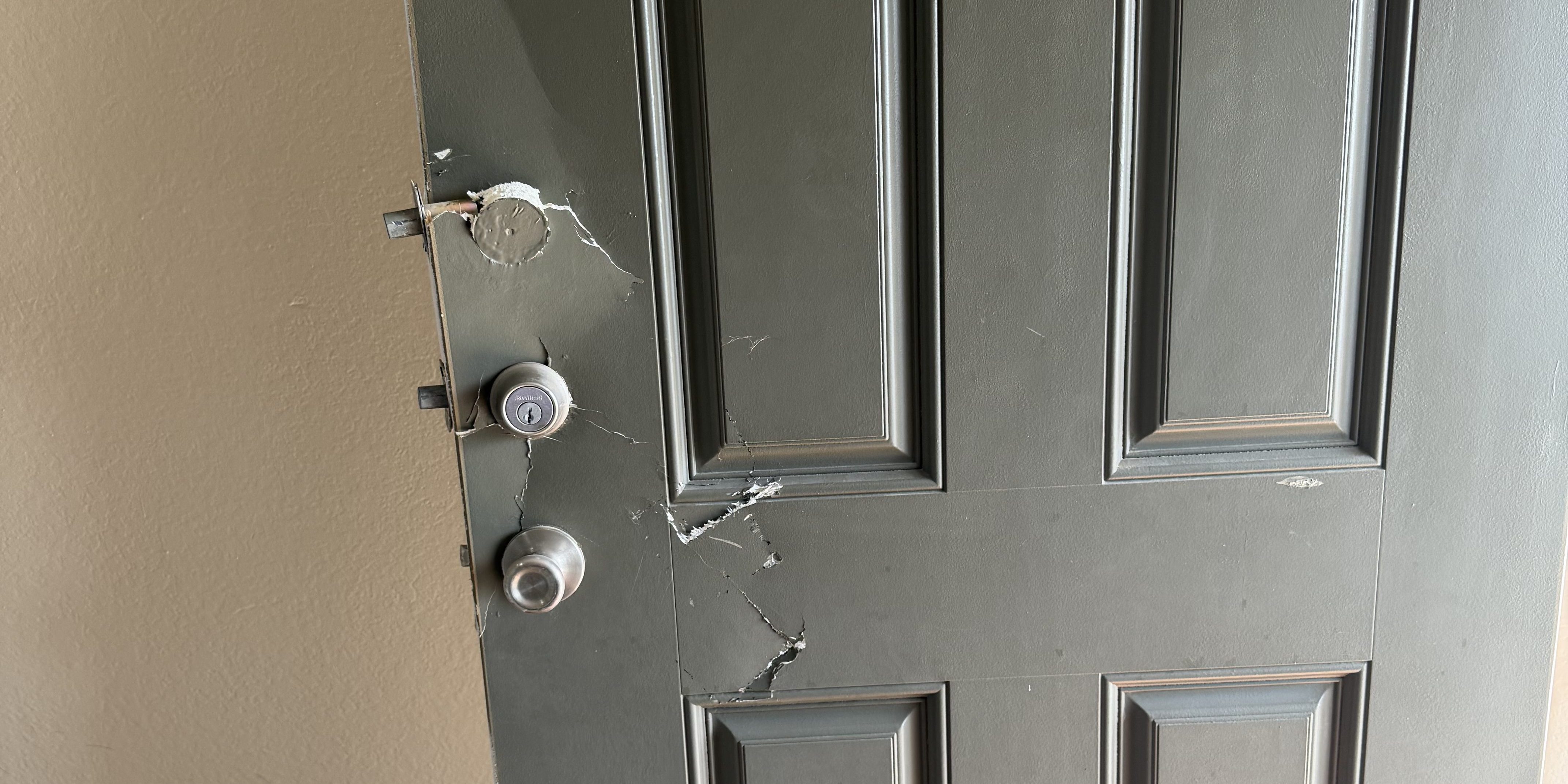
In the early morning hours of June 29, federal agents from the FBI and the Department of Homeland Security conducted a raid on home in Midlothian, Texas, in the Dallas–Fort Worth metropolitan area. The raid, which saw federal agents deploying flash-bang grenades and using armored vehicles, was authorized by a federal search warrant related to an ongoing federal investigation into an alleged bomb plot at a June 14 Ultimate Fighting Championship event at the White House. The Justice Department characterized the case as an assassination plot against high-ranking officials using of explosive drones and sniper rifles. The search warrant in Midlothian was issued as part of federal agents’ search for evidence of several potential charges, including conspiracy to commit murder, according to documents viewed by The Intercept. “They are stress-testing the limits of NSPM-7.” The subject of the raid in Texas claimed that, in the days after the raid, federal agents returned to her home and offered her up to $200,000 to act as an informant for federal law enforcement. The resident, “Doberman,” who asked only to be identified only by her social media handle because of ongoing threats to her safety, has not been indicted on any charges. Immigration and Customs Enforcement’s Prairieland Detention Facility, just a 20-minutes drive from Midlothian. First Amendment advocates said the Midlothian raid fit into the widespread pattern of aggressive policing tactics being used against the left, including other attempts to flip activists . “They are stress-testing the limits of NSPM-7, both by trying to cast various groups or voluntary associations that are protected by the First Amendment as being antifa, or as falling within the ambit of this sort of very broad definition of terrorism,” said Moira Meltzer-Cohen, a New York-based attorney who represents defendants in federal cases but is not working on the Midlothian raid. “We see that with this thing in North Texas, we saw that in Prairieland, and we’re seeing that in Minneapolis” — a reference to the recent indictments of 15 anti-ICE (immigration enforcement agency) activists in Minnesota. They broke down Doberman’s door in a “no-knock” raid, a controversial tactic that has led to the deaths of innocent people . “I was woken up by a loud crack, a loud bang,” Doberman told The Intercept in her first media interview since the raid. “I shot up and looked directly to my door, where I was then briefly blinded by a very fucking bright flash of light. In an interview with The Intercept, however, she said she had no intention of accepting. By signing up, I agree to receive emails from The Intercept and to the Privacy Policy and Terms of Use .
From the source
In the early morning hours of June 29, federal agents from the FBI and the Department of Homeland Security conducted a raid on home in Midlothian, Texas, in the Dallas–Fort Worth metropolitan area. The raid, which saw federal agents deploying flash-bang grenades and using armored vehicles, was authorized by a federal search warrant related to an ongoing federal investigation into an alleged bomb plot at a June 14 Ultimate Fighting Championship event at the White House. The Justice Department characterized the case as an assassination plot against high-ranking officials using of explosive drones and sniper rifles. The search warrant in Midlothian was issued as part of federal agents’ search for evidence of several potential charges, including conspiracy to commit murder, according to documents viewed by The Intercept. “They are stress-testing the limits of NSPM-7.” The subject of the raid in Texas claimed that, in the days after the raid, federal agents returned to her home and offered
OpenAI’s chief futurist, Joshua Achiam, notified colleagues on Tuesday that he is leaving the company later this month after nearly nine years, WIRED has learned. Achiam, who previously led a team tasked with upholding the organization’s nonprofit mission , told OpenAI staff that his departure was not motivated by any specific reason, but was something he’s been thinking about for a while. “The world is in on the secret now and it feels possible to work on the mission from outside the walls of a frontier lab,” Achiam said in a note to staff obtained by WIRED. “I believe we can get to a world of peace, unprecedented prosperity, and unimaginable possibilities, social and scientific. Whatever I do next, I will continue to work with you on making this vision real.” OpenAI has not yet announced if anyone will fill Achiam’s role, which sat at the intersection of the company’s AI safety and policy teams, and involved studying the potential harms and benefits caused by the rise of artificial intelligence. Achiam worked with senior company leaders, including global affairs chief Chris Lehane , to advocate for government regulations aligned with OpenAI’s mission: to ensure that AGI benefits all of humanity. OpenAI has reorganized its safety, product, and research teams numerous times since ChatGPT launched in 2022, after which the company grew rapidly from a small research lab into a massive tech company. In 2024, OpenAI announced the formation of a “mission alignment team” led by Achiam that was tasked with upholding the company’s mission. In the last year, OpenAI has worked to bridge the gap between its AI research and policy teams as part of an effort to develop rules and standards that anticipate where its technology is headed. As the two departments began collaborating more closely, several OpenAI researchers, including Boaz Barak, Noam Brown, and Adrien Ecoffet say they have become more involved in policy work. Ball is also expected to work with researchers and policy leaders in his role. That same year, head of policy research Miles Brundage and Steven Adler, who led research on dangerous capabilities of AI models, both departed OpenAI to found nonprofits that advocate for AI labs to adhere to strong safety and security standards.
The prolonged hospitalisation of United States Senator Mitch McConnell has raised questions among members of his Republican Party about whether he will be able to return to his work in the chamber. The 84-year-old McConnell, who had served for a decade as the top Republican in the Senate, has not voted since June 11. Three days after that, his office said he was admitted to hospital. Most recently, his staff has said McConnell was “receiving excellent care”. “The senator continues to improve, and is working closely with his staff on Kentucky and Senate matters while the Senate is out of session,” the staff said. On Tuesday, political commentator and former adviser Scott Jennings said he had spoken to McConnell “this morning” for about 20 minutes. “I told him we want to see him back at work as soon as possible,” he said in a post on X. The offices of Senate Majority Leader John Thune and fellow Republican Senator John Barrasso also said the pair had recently spoken with McConnell, according to the Politico news site. Still, other lawmakers pointed to a lack of clarity, even as they rejected any coordinated effort to conceal McConnell’s condition. McConnell’s prolonged absence could adversely affect Republicans, who hold a slim 53-47 majority in the US Senate. Continued hospitalisation could also complicate efforts to move defence funding and other legislation through the Senate Appropriations Committee. While McConnell is already planning to leave office at the end of his term in January 2027, any early departure from the Senate would likely lead to a special election in the US state of Kentucky to fill his seat.