ℹ️ Informational only. This site aggregates public news and does not provide legal or immigration advice. Always verify with USCIS.gov or travel.state.gov. Full disclaimer →
Russia launched an 11-hour drone and missile attack on Kyiv overnight into Thursday morning, killing at least 21 civilians and injuring more than 90, as Moscow said the bombardment was retaliation for recent Ukrainian strikes on Russian oil facilities. Loud explosions shook the capital, where more than 50,000 people took shelter in subway stations after air raid warnings were issued, while emergency crews searched through the rubble of damaged apartment buildings. The attack came as the war continued to widen beyond the front line, with Ukraine pressing long-range strikes inside Russia and Moscow responding with large-scale aerial assaults. Ukrainian officials say they are trying to force President Vladimir Putin to the negotiating table, but Russia has answered by hitting back, even as diplomatic efforts, most recently by the Trump administration, have not produced results. President Donald Trump and President Volodymyr Zelenskyy are expected to attend next week's NATO summit in Turkey. According to Ukraine's Emergency Service, 21 people were killed in Kyiv. Foreign Minister Andrii Sybiha described it as a "night of horror" in the capital. Flashes from exploding drones and missiles lit up the sky, while tracers from air defence fire streaked through the air and a large cloud of black smoke rose over the city. Authorities said more than 30 locations were damaged, including about 20 residential buildings. In the Desnianskyi district, residents were trapped inside a damaged nine-storey building, while in the Darnytskyi district, most of another nine-storey building collapsed.
From the source
Russia kills in Kyiv with retaliatory drone and missile barrage
Read the full article
Published by India Today – Top Stories on indiatoday.in
The administration of United States President Donald Trump is slashing commercial fishing regulations from coast to coast, including reopening New England waters to scallop fishing that was banned after overfishing. “We’re opening the Atlantic and the Pacific, and the American consumers are going to benefit from what we’re doing now,” White House adviser Peter Navarro said in a briefing with reporters on Thursday. The US Department of Commerce and National Oceanic and Atmospheric Administration (NOAA) announced regional priorities that the government said were designed to revitalise the seafood sector. In a post on Truth Social, Trump said that he was declaring a national scallops day to celebrate the action by NOAA. He added, “I have opened up the Oceans, Rivers, Lakes, and Seas to our Fishermen, and freed them from ridiculous Environmental restrictions that allowed other countries to take advantage of the United States’ Waters under Barack Hussein Obuma, Sleepy Joe Biden, and the Dumocrats. It is my Great Honor to have done so because I am the Fishermen’s Friend — GO OUT AND VOTE REPUBLICAN IN THE MIDTERMS, BECAUSE IF THE COMMUNISTS GET IN, YOU’LL NEVER FISH AGAIN!” It was not clear how NOAA planned to implement these priorities or how long it would take, given their scope. The moves follow an April 2025 executive order from Trump aimed at increasing domestic seafood production by directing the Commerce Department to loosen regulations and by opening marine monuments to commercial fishing. Marine monuments are designated to protect areas of the marine environment. They are managed by NOAA and other partners. “The goal was really simple: We need to defend our domestic fishing industry, promote productive harvest of our resources and boost the great American fishermen,” a senior administration official said. The desire to ease restrictions on scallop fishing came out of an Oval Office meeting between Trump and scallop fishermen, who complained they were not allowed to fish in parts of Georges Bank, Navarro said. Georges Bank is an area between Cape Cod in Massachusetts in the US and Cape Sable Island in Nova Scotia in Canada.
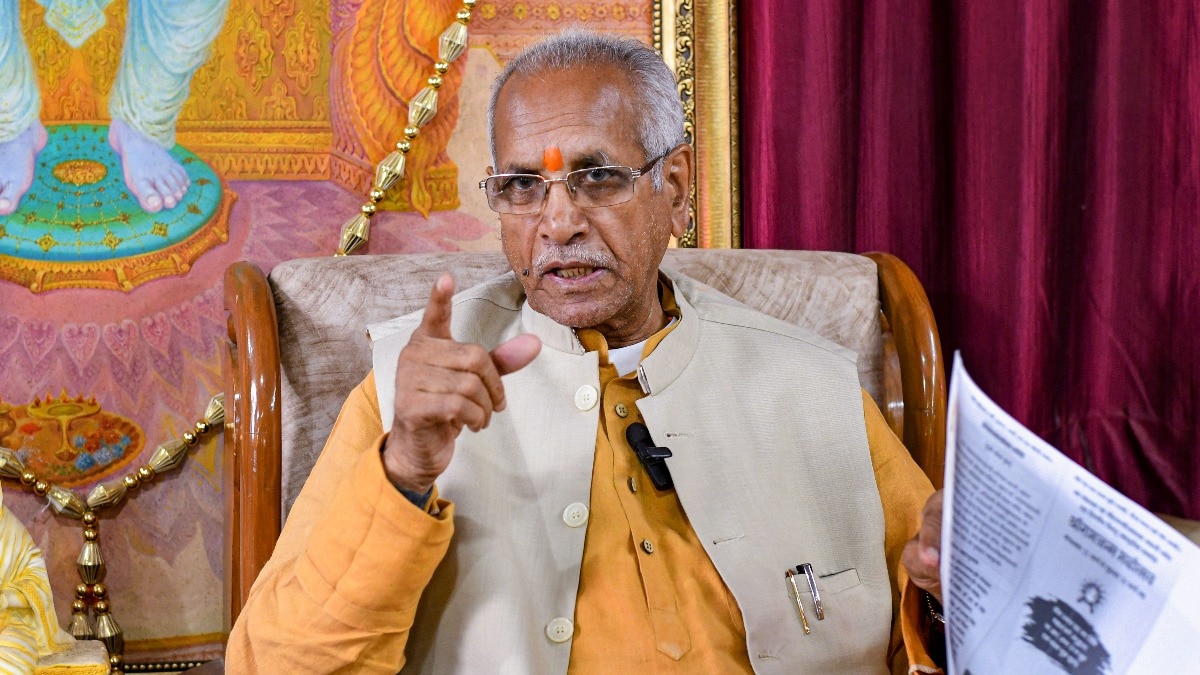
The controversy surrounding the alleged embezzlement of donations at the Ram Temple intensified on Thursday, with former Shri Ram Janmabhoomi Teerth Kshetra Trust chief Champat Rai reportedly indicating that he may step away from his role amid mounting scrutiny, while the Special Investigation Team (SIT) carried out an extensive round of questioning in Ayodhya. Ahead of a crucial trust meeting scheduled for July 6, sources said Rai has conveyed to close associates that his “service in Ayodhya is complete” and that he does not wish to continue under the “stigma” created by the donation embezzlement controversy. Sources also claimed that Rai, who is currently keeping a low profile, has said that the trust had been “betrayed”, though he did not elaborate on whom he was referring to. The SIT, which is probing allegations of misappropriation of donations collected at the Ram Temple, returned to Ayodhya on Thursday and questioned Rai, trust member Dr Anil Mishra and temple official Gopal Rao for a second time. Unlike the earlier round, when all three were examined separately, investigators reportedly questioned them together to reconstruct the sequence of events, understand how the alleged irregularities continued over a prolonged period and assess their respective roles. The development came as the SIT conducted an intensive eight-hour investigation at the Ram Temple complex. inside the Ram Temple complex. The allegations triggered a fresh political storm, with opposition parties demanding accountability from Prime Minister Narendra Modi and calling for a Supreme Court-monitored investigation. The Congress announced plans to launch a campaign against the alleged “looting” of temple donations. Venugopal wrote to Modi seeking an immediate Supreme Court-monitored investigation into what he described as the “Chanda Chori mega scandal”, alleging that those who spoke of “Ram Rajya” had embezzled offerings made by devotees. Authorities said the land was purchased in the name of his wife, Supriya Mishra, and construction was undertaken without the mandatory approval of the development authority.