There’s a New Democratic Machine. It’s Unabashedly Socialist.
The Intercept
theintercept.com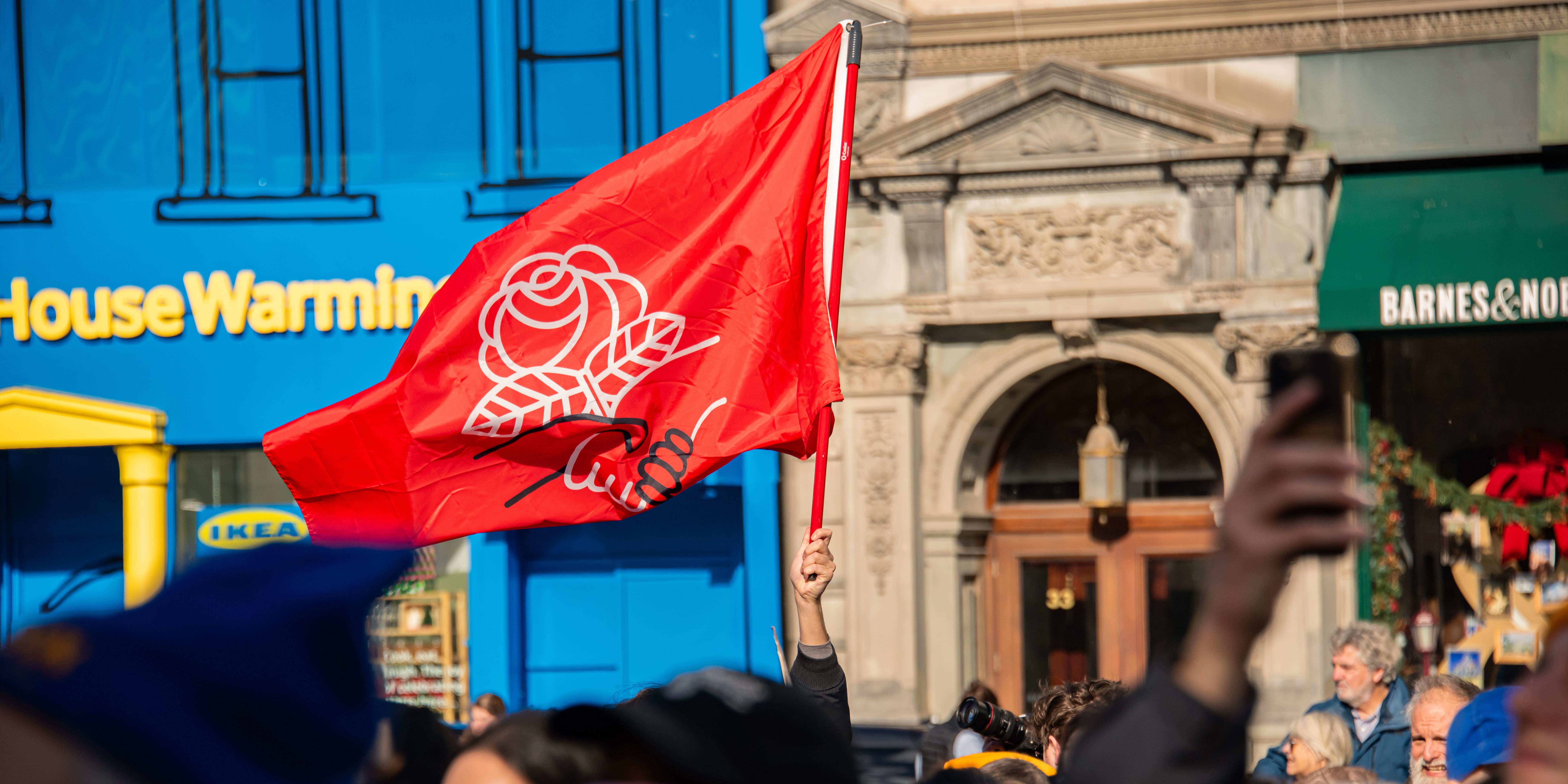
Summary
As democratic socialists toppled establishment favorites this midterm cycle, the old guard of the Democratic Party picked up a preferred cudgel against insurgents: These people were propped up by white, urban, coastal, educated electorates — not the ones the Democrats were trying to reach, and certainly not the working class. It’s true that the four victorious socialists running for Congress — Chris Rabb in Philadelphia , Darializa Avila Chevalier and Claire Valdez in New York City , and Melat Kiros in Denver — won in major cities where progressive politics are more likely to be popular than in the country’s many more rural, poorer, and less educated districts. But before this cycle’s big surge, the Democratic Socialists of America had spent the past decade backing and recruiting candidates in down-ballot races across the U.S., multiplying the number of people in office by a figure of eight and electing mayors, city councilors, state lawmakers, and other local officials in 39 states. “Everybody is feeling the crunch. Everybody is deeply concerned for their families, for their security,” said Becky Cooper, campaign manager to Francesca Hong, a Wisconsin state representative and formidable DSA candidate for governor. “That transcends political party, transcends ages, and it transcends geography. This is not just a coastal elites thing.” Despite the narrative that the socialist model only works among electorates dominated by young, white, coastal elites, the DSA, the largest socialist organization in the U.S., is decentralized and operates chapters in a majority of states. Its members currently hold office in states like Ohio, North Carolina, Texas, and Tennessee. Many of those candidates have been elected to local offices even as far-right campaigns to take over bodies like school boards have dominated in recent years. Jim Doyle did not seek reelection, the Democratic candidate lost the 2011 governor’s race to Republican Scott Walker, and the GOP flipped both state legislative chambers. “The Democrats at the time squandered that opportunity, and they really failed to deliver for the state.” Those failures, Clancy said, included not codifying abortion rights ahead of the Supreme Court decision to overturn Roe v. Wade , and not raising the minimum wage, which is still $7.25 an hour, when they had the votes to do so. “They didn’t even bring it up for a vote because they feared what that would mean for their large-dollar donors,” Clancy said. Hong’s performance in recent polling shows that socialist policies are resonating with voters, Madison said. “When folks say this is a reflection of the elites and folks from academia and young folks in college, that does a disservice to community members and their abilities to understand the circumstances that they are in and the ways in which parties have exploited their pain,” he said. “It doesn’t speak to the reality that folks are facing.” Nearly 2,000 miles southwest of Wisconsin’s capitol, the city of Los Angeles has all the markers of a coastal haven for democratic socialist politics to thrive: a large working class, high racial diversity, a significant immigrant population with a rich history of progressive organizing, all existing alongside pockets of wealthier, whiter,
From the source
As democratic socialists toppled establishment favorites this midterm cycle, the old guard of the Democratic Party picked up a preferred cudgel against insurgents: These people were propped up by white, urban, coastal, educated electorates — not the ones the Democrats were trying to reach, and certainly not the working class. It’s true that the four victorious socialists running for Congress — Chris Rabb in Philadelphia , Darializa Avila Chevalier and Claire Valdez in New York City , and Melat Kiros in Denver — won in major cities where progressive politics are more likely to be popular than in the country’s many more rural, poorer, and less educated districts. But before this cycle’s big surge, the Democratic Socialists of America had spent the past decade backing and recruiting candidates in down-ballot races across the U.S., multiplying the number of people in office by a figure of eight and electing mayors, city councilors, state lawmakers, and other local officials in 39 states. “
Read the full article
Published by The Intercept on theintercept.com